
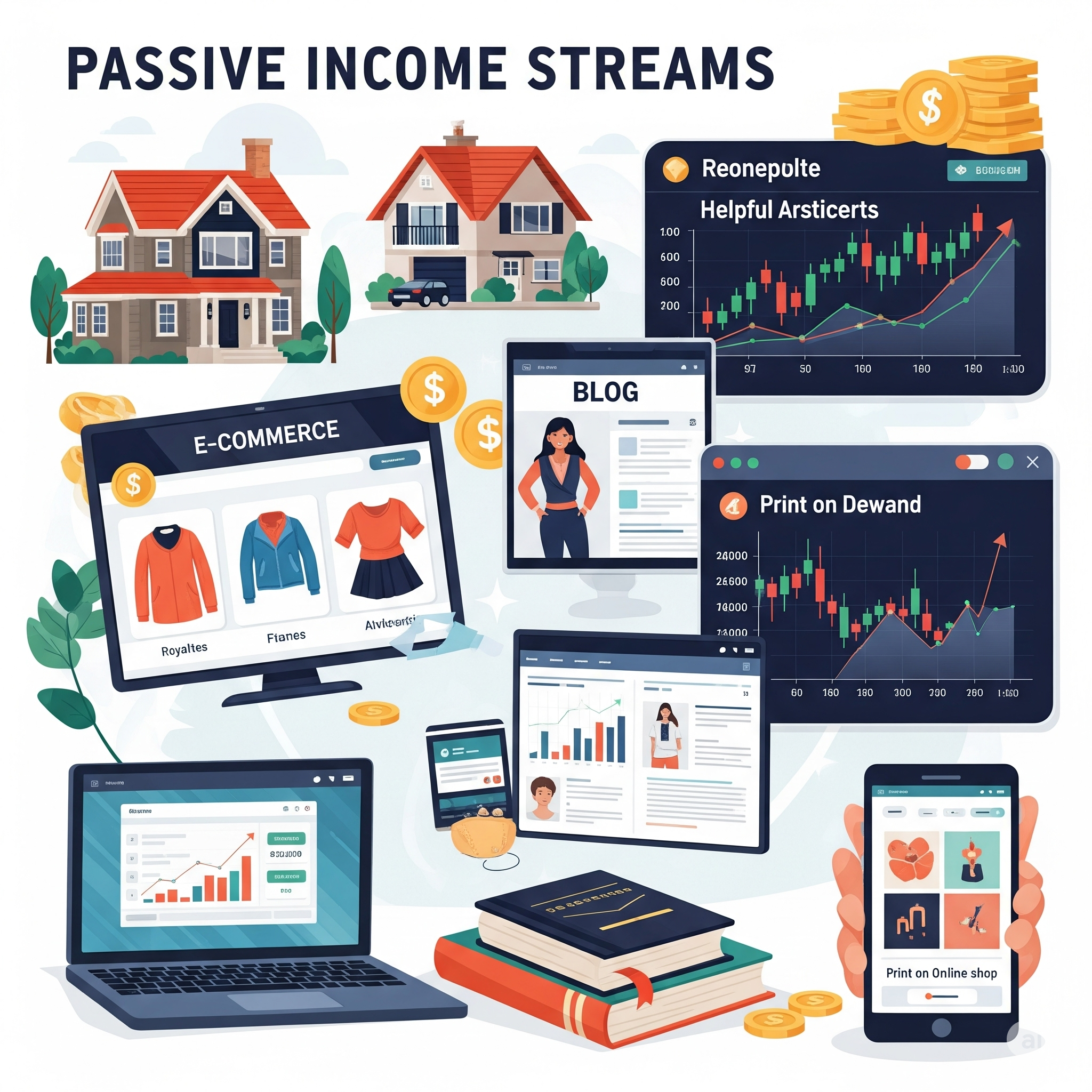
Creating a passive income stream is a smart financial strategy that can lead to long-term financial independence. Whether you’re looking to supplement your job, prepare for retirement, or achieve total financial freedom, the USA offers multiple avenues to build sustainable passive income. Below is a detailed guide to help you navigate this process.
1. Understand What Passive Income Is
Definition:
Passive income is money earned with minimal ongoing effort after the initial setup. Unlike active income (earned from working), passive income continues to flow even when you’re not actively working.
Common Examples in the USA:
- Rental property income
- Dividends from stocks
- Royalties from books, music, or digital products
- Profits from online businesses or automated e-commerce
- Interest from savings or bonds
2. Assess Your Financial Situation
Why it matters:
Before investing time or money, you need to know what you can afford to commit.
Steps:
- Calculate your monthly budget and savings
- Determine your risk tolerance
- Evaluate how much time you can dedicate to setting up the income stream
3. Choose the Right Passive Income Stream for You
Popular Options in the USA:
a. Real Estate Investing
- Buy rental property and earn monthly rental income
- Use property management companies for hands-off management
- Consider REITs (Real Estate Investment Trusts) if you want a lower barrier to entry
b. Stock Market & Dividends
- Invest in dividend-paying stocks or index funds
- Use platforms like Fidelity, Schwab, or Robinhood
- Reinvest dividends for compound growth
c. Online Businesses & Digital Products
- Create a blog, YouTube channel, or online course
- Sell eBooks or templates on platforms like Amazon Kindle, Etsy, or Gumroad
- Monetize with affiliate marketing or ads
d. High-Yield Savings & Bonds
- Open a high-yield savings account (Ally, Marcus, Capital One)
- Invest in U.S. Treasury bonds or municipal bonds
e. Peer-to-Peer Lending
- Use platforms like LendingClub or Prosper
- Earn interest on money you lend to individuals or businesses
4. Research Legal and Tax Implications
Key Considerations:
- Understand IRS rules for passive income and reporting
- Real estate income may qualify for tax deductions (mortgage interest, depreciation, etc.)
- Use a certified CPA or tax advisor for compliance
5. Start Small, Test, and Scale
How to Begin:
- Don’t try to do everything at once; start with one stream
- Track income and expenses carefully
- Learn from early mistakes and scale up once you’re comfortable
6. Automate and Outsource
Goal:
Make the income truly “passive” by minimizing your active involvement.
Examples:
- Use property managers for rentals
- Automate blog or e-commerce processes using tools like Zapier, Shopify apps, or WordPress plugins
- Outsource content creation, customer service, or marketing via Upwork or Fiverr
7. Reinvest Profits for Compounding Growth
Strategy:
Use the income generated to fund other streams or grow the existing ones.
Examples:
- Reinvest dividends into new stocks
- Use rental income to purchase additional property
- Take online business profits and build new digital products
8. Monitor and Optimize
Ongoing Maintenance:
- Regularly review your income sources
- Analyze performance and ROI
- Adjust strategies as markets, tools, and technologies change
9. Stay Informed and Keep Learning
Resources to Follow:
- Podcasts: BiggerPockets, Smart Passive Income
- Books: Rich Dad Poor Dad, The Millionaire Fastlane
- Blogs and YouTube channels about finance and entrepreneurship
10. Be Patient and Persistent
Reality Check:
Passive income takes time to build. Most streams require upfront work or capital, and success doesn’t happen overnight. Stay consistent, learn continuously, and be prepared for setbacks.
If you’d like, I can also tailor this prompt for a specific audience (e.g., college students, retirees, tech workers), or format it as a guide, blog post, or video script. Let me know!