
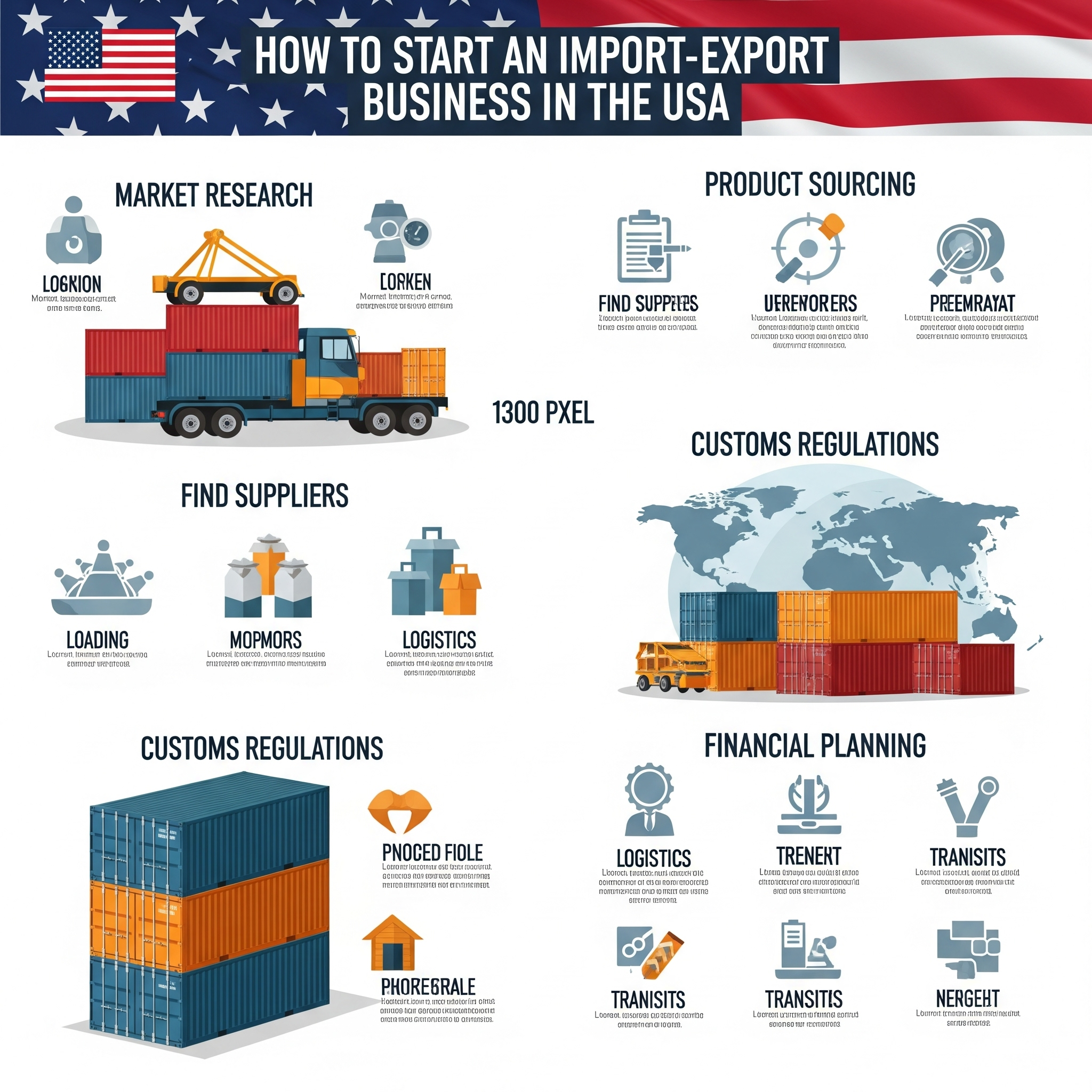
Starting an import-export business in the USA can be a profitable and exciting venture if you understand the process, regulations, and market strategies. Whether you want to bring in unique goods from overseas or export American products to global markets, this guide will walk you through everything step by step.
1. Understand What an Import-Export Business Is
An import business buys products or goods from other countries to sell in the USA, while an export business sells American-made products to customers abroad.
Common examples:
- Importing electronics from Asia to sell in the U.S.
- Exporting American-made fashion or agricultural products to Europe or Latin America
This type of business involves working across international borders, which means dealing with customs, logistics, foreign suppliers, currency exchange, and legal rules.
2. Choose Your Niche or Product Focus
Before you jump in, define what you’ll specialize in. The import-export world is vast, and narrowing your niche gives you a better chance of success.
Questions to Help You Choose
- What products are in demand in the U.S. or abroad?
- Do you have existing knowledge or contacts in a specific industry?
- Can you offer unique value — like eco-friendly, artisanal, or high-quality products?
Popular Niches
- Fashion and apparel
- Electronics
- Automobiles and auto parts
- Health and beauty products
- Food and beverages
- Industrial equipment
- Agricultural products
Tip: Research market trends and international trade reports to spot opportunities.
3. Create a Business Plan
A solid business plan gives you clarity and helps you attract funding or partners.
Your Plan Should Cover
✅ Business overview — Are you focusing on imports, exports, or both?
✅ Target markets — Which countries will you work with?
✅ Product or service details — What are you selling, and why will people buy it?
✅ Competitor analysis — Who else is doing this, and how will you stand out?
✅ Marketing strategy — How will you find clients and generate sales?
✅ Financial projections — Estimate costs, revenue, and profit margins.
4. Register Your Business Legally
Steps in the USA
- Choose a business name and check if it’s available.
- Decide your legal structure — LLC, corporation, sole proprietorship, etc.
- Register your business with your state (get a state business license if required).
- Apply for an EIN (Employer Identification Number) with the IRS for tax purposes.
Depending on what you’re importing or exporting, you may also need special permits (e.g., for alcohol, food, or agricultural products).
5. Understand Legal Requirements and Compliance
International trade is highly regulated. You must follow U.S. laws as well as the laws of the countries you trade with.
Import Regulations
- Work with U.S. Customs and Border Protection (CBP)
- Determine if your products need specific import licenses or permits
- Understand tariffs and duties that apply to your goods
Export Regulations
- Follow rules set by the U.S. Department of Commerce, Bureau of Industry and Security (BIS)
- Check if your goods require an export license
- Understand embargoed countries or restricted products
Tip: Visit export.gov or trade.gov for helpful government resources.
6. Find Reliable Suppliers or Buyers
Your business depends on strong international relationships.
If You’re Importing
- Search for reputable suppliers through trade shows, B2B platforms (like Alibaba, Global Sources), or personal networks.
- Order product samples before placing large orders.
- Negotiate prices, payment terms, and shipping conditions.
If You’re Exporting
- Research international markets that need U.S. products.
- Connect with foreign distributors, wholesalers, or retail buyers.
- Attend global trade fairs or use U.S. Commercial Service matchmaking programs.
Tip: Due diligence is essential — check references, verify credentials, and understand cultural business practices.
7. Handle Logistics and ShippingInternational trade involves complex logistics. You’ll need to figure out:
- Freight forwarding (a freight forwarder can manage your shipping process)
- Incoterms (international shipping terms like FOB, CIF, EXW)
- Customs clearance on both ends
- Insurance to protect against loss or damage during transit
For beginners, partnering with an experienced freight forwarder is highly recommended — they help navigate paperwork, compliance, and shipment tracking.
8. Set Up Payment and Currency Exchange Systems
International payments can be tricky due to:
- Currency differences
- International banking regulations
- Payment risks
Best Practices
- Use secure payment methods (like letters of credit, wire transfers, escrow services)
- Work with your bank or a foreign exchange specialist to manage currency conversions
- Establish clear contracts outlining payment terms and timelines
Tip: Always plan for exchange rate fluctuations, which can affect your profit margins.
9. Develop a Marketing and Sales Strategy
You can’t just rely on word of mouth — you need a clear strategy to bring in business.
For Import Businesses
- Build an e-commerce website or sell through platforms like Amazon, eBay, or Etsy.
- Partner with U.S. retailers or distributors.
- Run digital marketing campaigns (social media, Google Ads, influencer marketing).
For Export Businesses
- Create marketing materials tailored to your target country’s language and culture.
- Attend international trade shows or expos.
- Work with foreign agents or local sales representatives.
10. Stay Compliant and Keep Learning
International trade laws, tariffs, and regulations change frequently. Stay informed by:
- Subscribing to trade newsletters
- Joining industry associations like the National Association of Small Business International Trade Educators (NASBITE)
- Attending webinars or workshops on global trade topics
Compliance mistakes can cost you big in fines or shipment delays, so stay vigilant.
Common Challenges to Expect
✅ Regulatory hurdles — Understand that each product and country comes with its own legal maze.
✅ Cultural differences — Learn the business etiquette of your target markets.
✅ Logistics hiccups — Shipments can get delayed or stuck in customs; have backup plans.
✅ Payment risks — Protect yourself with secure, agreed-upon payment terms.
Final Tips for Success
- Start small — Test one or two products or markets before scaling up.
- Work with experts — Freight forwarders, customs brokers, and trade consultants can save you time and money.
- Focus on building relationships — Trust is everything in international trade.
- Leverage government resources — Use U.S. trade offices, small business development centers, and export promotion programs.
Conclusion: Turning Global Trade into a Thriving Business
The import-export business offers the exciting possibility of connecting American markets to the world — and vice versa. While the process can seem overwhelming at first, with careful research, planning, and the right partners, you can build a profitable company that thrives in the global marketplace.